Independent mattress guide
Naturepedic EOS Classic: How to Evaluate Its Modular Comfort Options
A mattress that lets you choose—or later change—its feel offers an appealing answer to a familiar problem: comfort is personal, and certainty is hard to come by. The useful question is not simply whether a mattress is adjustable, but what can be adjusted, how the options work, and whether that flexibility matches the way you sleep.
Mattress shopping asks for a decision about a sensation you may not yet understand. A showroom offers a few minutes on a bed; an online description offers a vocabulary of firmness levels, materials, and construction; your body, meanwhile, has been collecting its own evidence for years. You may wake with a stiff shoulder, sleep comfortably on one surface and not another, or discover that the bed you loved in a store feels different after a full night.
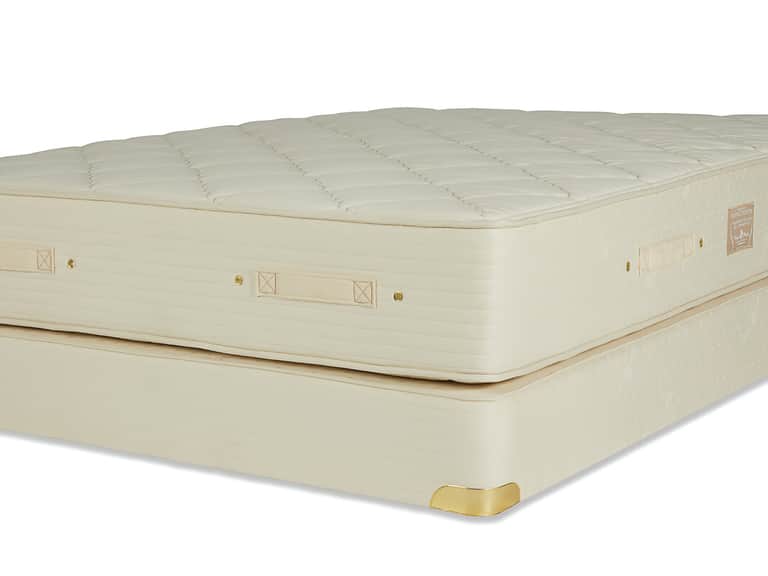
A modular mattress such as the Naturepedic EOS Classic approaches this uncertainty through configuration. Rather than treating comfort as a fixed property, a modular design makes some part of the mattress’s feel changeable. That can be valuable—but only if you understand what the available choices are and what changing them involves. “Customizable” is a promise of options, not a guarantee that every sleeper will find a perfect setting.
This guide offers a neutral way to assess the EOS Classic’s modular comfort approach. It does not assume that a particular configuration will suit every person, or that flexibility alone makes a mattress a better value. Instead, it lays out the questions worth asking about firmness, sleep position, materials, care, durability, and the terms for adjusting components over time.
What “modular” should mean in practice
In ordinary use, modular means a product is made of separable parts that can be arranged or replaced. In a mattress, those parts may allow the sleeper, retailer, or manufacturer to alter some element of the comfort system. But the label does not, by itself, tell you which layers or components are changeable, whether the mattress is adjustable on each side, or whether a change requires professional help.
Before comparing configurations, ask for a clear description of the system. Which components determine the feel? Can they be changed after delivery, or must the preferred arrangement be selected at purchase? Are different choices available for two people sharing the same bed? If the components can be exchanged, how does that process work—and are there fees, deadlines, shipping costs, or limits on the number of changes?
These questions are not administrative footnotes. They define the practical value of modularity. A mattress that can be meaningfully adjusted through a straightforward process offers one kind of flexibility. A design whose options are technically replaceable but difficult or costly to access offers another. The name of a comfort system is less informative than the instructions for using it.
- Identify the adjustable parts: Ask what can be changed and what remains fixed.
- Clarify the timing: Find out whether choices are made before delivery, after an initial trial, or later in the mattress’s life.
- Check the process: Confirm who handles a component change and whether there are associated costs.
- Consider each sleeper: If sharing a bed, ask whether the two sides can be configured independently.
Firmness is a description, not a measurement of your needs
Firmness scales look precise. They can suggest a sequence from soft to firm, as if the sleeper were selecting a setting on a thermostat. In reality, the words are useful shorthand, not a universal standard. A mattress described as medium by one company may feel different from a medium mattress made with other materials or construction. Body shape, weight distribution, sleeping position, and personal sensitivity all influence what a surface feels like.
It helps to separate two ideas that are often blended together. Firmness usually describes the initial sensation at the surface: how yielding or resistant the mattress feels when you lie down. Support concerns how well the sleep surface holds the body in a comfortable position. A mattress can feel soft at first and still provide substantial support; a firm surface is not automatically supportive for every body.
When considering the EOS Classic, ask how the manufacturer describes each comfort option and what those descriptions mean in the context of the mattress’s construction. If possible, try a suitable configuration in person, while remembering that a brief test is only one piece of evidence. The goal is not to choose the firmest option that sounds reassuring or the softest option that feels pleasant for a minute. It is to find a surface that remains comfortable over time, without an obvious sense of strain or pressure.
Keep a short record of your reactions. Note the position in which you tested the mattress, how long you stayed on it, whether your shoulders or hips felt compressed, and whether your lower back seemed to settle naturally. A specific observation—“my shoulder felt pressed when I lay on my side”—is more useful than a general one—“I like soft beds.”
Start with the way you sleep, then allow for the way you move
Sleep position provides a helpful starting point, not a rigid formula. Side sleepers often notice pressure around the shoulder and hip because those areas make concentrated contact with the mattress. A surface that yields enough to reduce that pressure may feel comfortable, but it still needs to keep the body from sinking in a way that feels awkward. Back sleepers may pay closer attention to whether the pelvis and shoulders settle without leaving the lower back feeling unsupported. Stomach sleepers may be particularly alert to excessive sinking around the middle of the body.
Most people do not remain in one position from bedtime until morning. They turn, curl up, stretch out, or move from one position to another. A mattress that feels excellent for one posture but awkward when you shift may not be the most comfortable choice over a whole night. Consider how easily you change position and whether the surface seems to welcome that movement or resist it.
Body shape also matters, though not in a way that can be reduced to a single rule. Two people of the same weight can distribute it differently, and that can alter how the same mattress feels. Height, shoulder width, hip shape, and the amount of surface contact all contribute. For couples, differences between sleepers can make independent configurations especially relevant—but first establish what the EOS Classic actually permits on each side and how the sides are assembled.
If you have persistent pain, numbness, or another health concern, a mattress choice should not be treated as a diagnosis or treatment plan. Comfort can matter to sleep, but a product description cannot determine the cause of a symptom. Seek advice from a qualified health professional when symptoms persist or interfere with everyday life.
Look beyond the firmness label to the materials
Two mattresses can share a firmness description and still feel quite different. The reason lies in the materials, their arrangement, and how the layers interact. A comfort layer may cushion the body, while deeper components contribute resistance and shape retention. Fabric, quilting, and the mattress base can also change the first impression and the way the bed behaves under movement.
For the Naturepedic EOS Classic, request a current, component-by-component account of the materials in the available configurations. Ask what each material does, where it sits in the mattress, and whether selecting a different comfort option changes the material itself or only its firmness or arrangement. If you care about natural or organic materials, look for precise definitions and documentation rather than relying on broad terms in promotional language. Certifications, when present, apply to particular materials or processes; ask what a given certification covers.
Material preferences can be practical as well as philosophical. Some sleepers prioritize airflow or a less enveloping feel; others prefer a close contour. People sensitive to odors may want to ask about unpacking, ventilation, and how long any initial smell may last. Those who value a specific material should consider how it feels under their body, not only how it reads on a specification sheet.
It is also worth asking which parts can be inspected or replaced, and whether the construction makes routine care straightforward. A modular design may offer a route to change the comfort feel, but that does not mean every layer is washable, replaceable, or intended for frequent handling. The care instructions are part of the product’s real-life design.
Treat adaptability as a question of time
One appeal of a modular mattress is the possibility that it can respond to changing preferences. A sleeper may discover that the initial choice feels too firm, or that a different configuration works better after a period of adjustment. Needs can also shift as routines, bodies, and sleeping arrangements change. This is the logic behind adaptability: instead of assuming that one decision must remain ideal indefinitely, the mattress provides a way to revisit it.
But adaptability should be evaluated in concrete terms. Ask which kinds of changes the system can accommodate. Does it allow a different feel on one side, a change in a particular layer, or only a selection among preset options? How does the exchange process work? Are replacement components available for the expected useful life of the mattress? Is there a defined period during which a comfort change is included, and what happens afterward?
Terms can be easy to skim when the central question feels more exciting: “Will I like it?” Yet return policies, comfort-exchange rules, warranty coverage, and care requirements affect the risk of the decision. Read them directly and distinguish among them. A trial period, if offered, is not the same thing as a warranty; a warranty does not necessarily cover ordinary changes in feel; and a component exchange may have conditions separate from either.
Look for the details in writing. Verify the length of any trial or exchange window, whether a minimum period of use applies, who pays for transport, and whether a used component must be returned. Ask how the mattress should be supported and whether a particular base is required. If a retailer or manufacturer gives an explanation verbally, request the relevant policy so you can compare it with the written terms.
Durability is more than the ability to change a layer
A mattress may retain its usefulness in different ways. The materials may hold their shape; the cover and construction may withstand normal use; or, in a modular design, certain components may be replaceable if the feel no longer suits the sleeper. Those are related but separate questions. Replaceability does not prove that every component will last longer, and a durable mattress is not necessarily one that can be reconfigured.
Ask what the manufacturer says about the expected maintenance of the EOS Classic and which parts, if any, are designed to be replaced. Find out whether a change in comfort is an adjustment of intact components or a response to a component that has worn out. Then check what the warranty actually covers, including exclusions related to the foundation, normal softening, stains, or improper care. The warranty is a statement of terms, not a prediction that a mattress will feel unchanged for a particular number of years.
Good support beneath the mattress also matters. Follow the manufacturer’s directions for a bed frame, platform, or foundation, and confirm that the base is compatible with the mattress’s construction. An unsuitable foundation can complicate both comfort and warranty claims. If the mattress is heavy or built from multiple components, ask how many people are needed to move or open it, and whether the design makes turning or repositioning practical.
A calm way to compare configurations
It is tempting to treat mattress selection as a hunt for a single correct answer. A more useful approach is to compare a small number of plausible options against the same questions. If the EOS Classic offers several comfort choices, write down the distinction between them as the manufacturer explains it. Avoid relying on names alone. Then consider how each choice relates to your sleep position, pressure sensitivity, and preferred surface feel.
Where an in-person trial is available, take your time. Lie down in your usual positions, use the pillow you normally sleep with if practical, and give each position more than a few seconds. Notice pressure, ease of movement, and whether the surface feels stable. If you share the bed, test together; the experience of one sleeper does not establish the comfort of the other.
If you are choosing remotely, record your current mattress’s strengths and weaknesses before reading reviews or product descriptions. What feels comfortable? What wakes you? What do you wish were different? This small exercise makes it easier to distinguish your priorities from the features that happen to receive the most attention in marketing. Reviews can add useful perspectives, especially about customer service or logistics, but another person’s body and preferences cannot substitute for your own.
After delivery, observe the mattress over a reasonable period within any stated trial terms. Keep notes on how you sleep and how you feel on waking, but avoid attributing every good or poor night to the mattress. Sleep is affected by many things. A consistent pattern across nights is more informative than a single morning.
Questions to ask before deciding
- Which parts of the EOS Classic can be configured or changed, and which parts are fixed?
- How are comfort options described, and what distinguishes one from another in practical terms?
- Can two sides be configured independently for people with different preferences?
- What materials are used in each option, and can the manufacturer provide current specifications or certification details?
- How do component changes work after delivery? Are there deadlines, fees, shipping costs, or limits?
- What care does the mattress require, and which cleaning methods should be avoided?
- What kind of base is required or recommended?
- What do the trial, exchange, and warranty policies each cover—and what do they exclude?
- Are replacement components available, and is there a stated process for obtaining them?
Who may value a modular approach?
Modularity may be worth investigating if you have found it difficult to predict your preferred firmness, if you and a partner want different feels, or if you value the ability to make a defined adjustment after purchase. It may also appeal to people who prefer a mattress whose comfort system is not an entirely sealed, one-choice proposition. In each case, the appeal depends on the specifics: meaningful options, understandable instructions, accessible components, and policies that make changes realistic.
It may matter less to a sleeper who already knows what feels comfortable and is satisfied with a simpler construction, or to someone for whom the available configuration process is inconvenient or costly. A larger set of options can ease a decision, but it can also make it harder to decide. More choice is helpful when it corresponds to a real need; otherwise it can become another set of labels to interpret.
Price, space, delivery logistics, and the mattress’s compatibility with an existing frame all belong in the calculation. So do the ordinary priorities of daily life: whether the surface feels pleasant, whether it suits the people sleeping on it, and whether its care is manageable. A sophisticated comfort system is not automatically a better fit than a straightforward one.
The useful conclusion is a better question
The Naturepedic EOS Classic is best approached not as a promise of perfect sleep, but as a particular answer to the problem of mattress choice: comfort can be configured, and perhaps revisited. To judge whether that answer is useful, ask what the system actually lets you change, how its materials and firmness options are distinguished, and what the written terms say about care, exchanges, and long-term availability.
Then bring the decision back to the body that will use the bed. Consider your usual sleep positions, the places where pressure tends to accumulate, how readily you move at night, and whether another sleeper needs a different feel. Be specific about what you are trying to improve. “I need a supportive mattress” is a starting point; “I want less pressure at my shoulder when I sleep on my side, without feeling that my middle sinks too far” is a more useful description.
In mattress shopping, confidence rarely arrives as a revelation. More often, it comes from asking the same practical questions of every option, reading the terms before you need them, and noticing how a surface feels over time. Modularity can make that process more forgiving. It cannot replace the process itself.